PGT can check whether a developing embryo has the expected number of chromosomes, potentially increasing your chances of a healthy pregnancy.
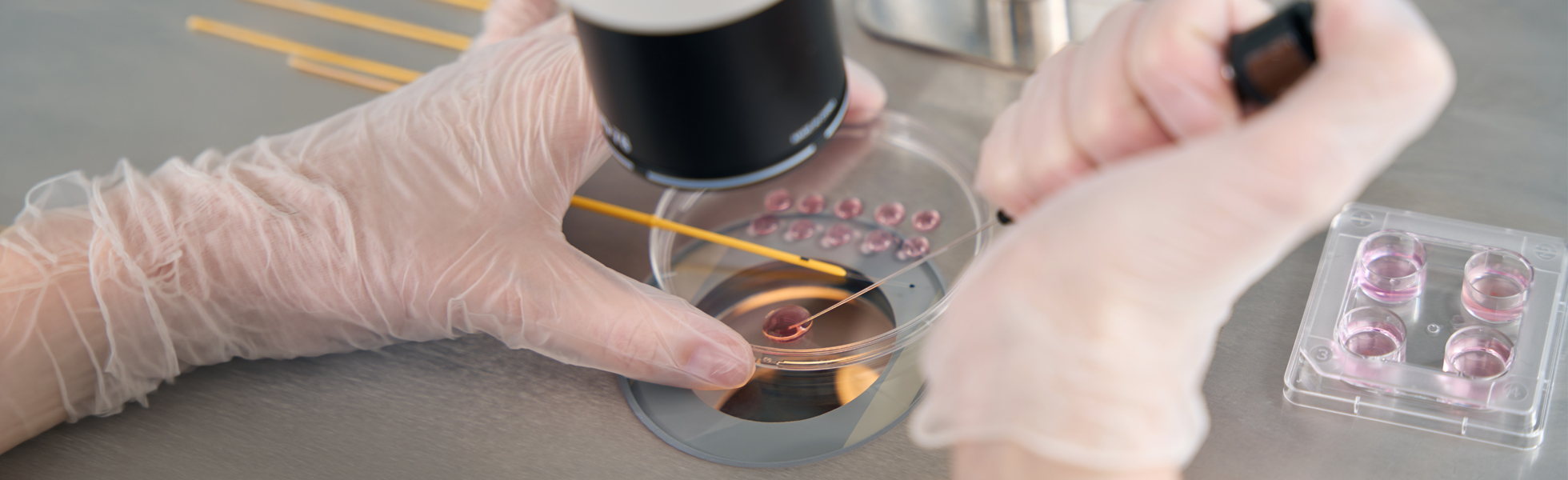
The aim of PGT is to reduce the chance of transferring an embryo with abnormal genetic material, as these embryos are less likely to result in a successful pregnancy. The test can identify familial single-gene disorders, extra or missing chromosomes, or chromosomal rearrangements.
PGT is only available for embryos created in vitro, that is, outside the body – either through in vitro fertilisation (IVF) or intracytoplasmic sperm injection (ICSI). The test is entirely optional but can give you peace of mind that the embryos selected for transfer have the highest chance of developing into a healthy baby.
It may be of benefit if you:
“If you’re anxious about any prior conditions, the best thing to do would be to make an appointment. Having a conversation with the fertility specialist might give you some clarity about your next steps.” – Dr Chandrika Parmar
PGT-A is designed to determine if an embryo contains the correct number of chromosomes, reducing the chances of unsuccessful implantation, miscarriage, or genetic conditions like Down syndrome (trisomy 21) and Edwards syndrome (trisomy 18).
Aneuploidy, or the presence of an abnormal number of chromosomes, is a common issue in embryos, regardless of whether they were conceived naturally or through IVF. The risk of aneuploidy increases with maternal age.
PGT-M is a targeted genetic test for embryos created via IVF or ICSI when one or both partners carries a specific single-gene disorder. This testing allows families with a known genetic condition to reduce the risk of passing it on to their children. Over 350 single-gene conditions are covered in PGT-M, including cystic fibrosis, spinal muscular atrophy, fragile X syndrome, thalassaemia, and Huntington disease.
PGT-M may be a suitable option if you and/or your partner have a personal or family history of a genetic disorder, or are known carriers of a faulty gene. Carriers are individuals who have an abnormal gene but do not express the condition themselves.
It is important to note that even though PGT-M covers hundreds of genetic conditions, it does not test for all possible genetic disorders, particularly when the gene involved is unknown.
In some individuals, the correct number of chromosomes is present, but their arrangement is altered. These chromosomal variations, known as balanced translocations or inversions, generally do not affect your own health but can increase the risk of passing on an unbalanced chromosomal arrangement to the embryo, which may lead to miscarriage, or result in a child with developmental or health problems.
PGT-SR analyses embryos to ensure they contain the correct chromosome arrangement before being transferred as part of the IVF/ICSI treatment. This type of PGT is recommended for individuals with a known balanced chromosomal rearrangement.
A comprehensive review of your personal and family medical history, including any genetic considerations, allows Dr Parmar to make tailored recommendations regarding genetic testing. PGT may be particularly valuable if you and/or your partner are considered to have a high risk of passing on an inheritable genetic disorder
PGT can only be offered for embryos created through IVF or ICSI. All collected eggs suitable for fertilisation are either combined with sperm in a laboratory dish (as in IVF) or injected with a sperm cell each (as in ICSI), and developed for several days in a specialised incubator.
A biopsy of several cells is taken from each embryo and sent for preimplantation genetic testing. These embryos are frozen and safely stored while waiting for the test results.
The results of PGT will inform which embryo, if any, are most likely to offer the highest chance of a successful pregnancy and healthy baby. This embryo is selected for the final step of the IVF/ICSI treatment, which involves transferring the embryo into the uterus of the partner intending to carry the pregnancy.
